
The concept of leadership is continuously evolving. Much of this change is attributed to the fact that today’s age is the era of information and rapid growth of technology. Different types of leadership theories have been developed over the years. In this blog, different leadership theories will be looked at such as trait theory, behavioral theory and finally focusing on the most recent transformational leadership style.
Background of leadership theories
Trait Theory
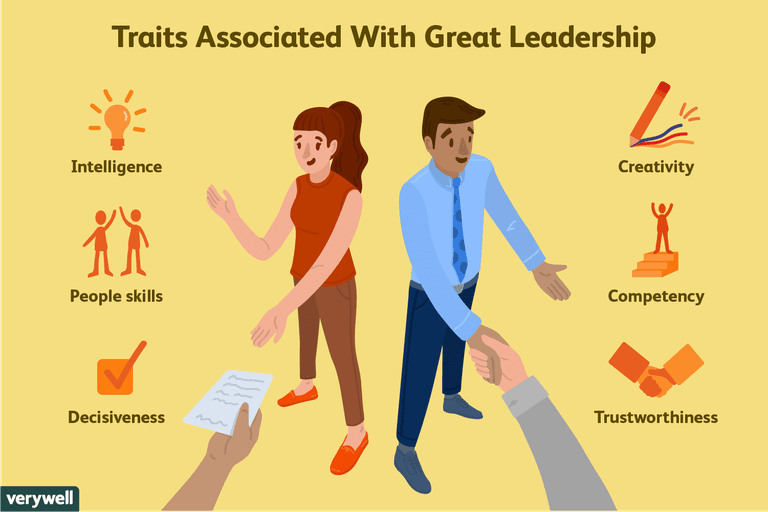
The focus of the trait theory is on identifying personal features which distinguish leaders from others. The assumption of the theory is that leaders have specific characteristics that enable them to be in leadership positions. Physical attributes involving weight, height, and age are what differentiate leaders(Mook, Whitman, Quarter, & Armstrong, 2015). To add, figure 1 shows that researchers related personality traits such as dominance and self-confidence with leadership. However, trait theory did not offer accurate predictions of leadership behavior, leading to its failure. The behavioral theory was developed later to address the faults of the trait theory.
The Behavior theory
The Behavior theory
The behavior theory includes autocratic and democratic leadership styles(Mook et al., 2015 ). Autocratic leaders make decision with little or no involvement from employees. These types of leaders are more confident and comfortable with making all decisions. Although research indicates that autocratic leaders have less creativity compared to new leadership styles. (Iqbal .et al, 2015). Democratic leadership style focuses on providing guidance and help your team and departments while accepting and receiving advice or input from individual team members. This leadership style gives employees full control and responsibility when assigned to tasks and. That led to more commitment of workers toward department goals, and meeting deadlines. (Iqbal .et al , 2015) . However, if change is required because of future uncertainty, democratic leadership style does not guarantee the company in overcoming changes
Transformational leadership styles
The transformational leader expresses how valuable the employees are to the company. Transformational leaders focus on increasing motivation, and morals of their followers. This leadership style focuses on changes that need to occur in an organization by creating an empowered skillful staff that can adapt to what comes in their way. Transformational leaders can choose whether to be participative, authoritarian or democratic depending on the situation. (Bass, 1999). Figure 2 shows different behaviors that can be used within transformational leadership behavior .
| Transformational leadership style | Behavior |
| 1) Idealized Behaviors: living one’s ideals | Talk about their most important values and beliefs Specify the importance of having a strong sense of purpose Consider the moral and ethical consequences of decisions Talk about the importance of trusting each other |
| 2) Inspirational Motivation: inspiring others | Talk optimistically about the future Talk enthusiastically about what needs to be accomplished Articulate a compelling vision of the future Express confidence that goals will be achieved Provide an exciting image of what is essential to consider Take a stand on controversial issues |
| 3) Intellectual Stimulation: stimulating others | Re-examine critical assumptions to question whether they are appropriate Seek differing perspectives when solving problems Get others to look at problems from many different angles Suggest new ways of looking at how to complete assignments Encourage non-traditional thinking to deal with traditional problems Encourage rethinking those ideas which have never been questioned |
| 4) Individualized Consideration: coaching and development | Spend time teaching and coaching Treat others as individuals rather than just as members of the group Consider individuals as having different needs Help others to develop their strengths Listen attentively to others’ concerns |
| 5) Idealized Attributes: Respect, trust, and faith | Instill pride in others for being associated with them Go beyond their self-interests for the good of the group Act in ways that build others’ respect Display a sense of power and competence Make personal sacrifices for others’ benefit Reassure others that obstacles will be overcome |
Figure 1 Transformational Leadership Styles and Behaviors Source ( Bolden. et al ,2003)
Criticism on transformational leadership style:
- Ambrose, Sriraman, and Pierce (2014)argue that while transformational leadership is linked with change, it will result in a top-down leadership approach which is not suitable for today’s changing world.
- Dasborough and Ashkanasy hold that transformational leadership opens up opportunities for emotionally intelligent leaders to manipulate the emotions of their followers for evil or self-gain interests(Murphy, 2014). However, despite the extensive criticism of leadership approaches, they have practical applicability in today’s increasingly changing business environment., research show that transformational leadership is suitable for promoting organizational change(Hicks, 2013). It is worth noting that organizational change is particularly significant in the modern day, and every business has to be prepared for it.
- Goksoy (2015)argues that organizational change cannot be ignored or neglected and kept for the last minute. The reality is that change is inevitable whether an organization plans for it or not. Therefore, every business has to establish an organizational culture to be ready to face and adapt to the uncertainties of today’s changing world (Goksoy, 2015).
It is clear to say that transformational leadership has features which make it relevant in today’s changing world, especially in regard to organizational change. transformational leadership could be important in today’s business environment because of its ability to enhance the performance of employees. Furthermore, transformational leadership motivates a company’s workforce to higher levels of performance. It will create commitment and loyalty as well as enhancing satisfaction among leaders (Hicks, 2013).
UBER
Poor leadership approach is the primary cause of the problems facing today’s business enterprises. The case of Uber provides an excellent example of a leadership challenge. Travis Kalanick had to step down as CEO of UBER because the company faced numerous problems, including sexual harassment issues and worker try to break into raiders homes.
Press CNN link to watch a video about an UBER driver that tried to break into employee home:
https://edition.cnn.com/videos/us/2019/04/09/uber-driver-attempted-break-in-burglary-mxp-vpx.hln
Uber had a simple executive leadership structure which resulted in cultural misunderstanding, poor performance, and management failure. Transformational leadership style at and near the senior levels of an organization should be implemented, an independent board, and exhaustive risk management practice can drive a firm towards success in a better manner compared to one leader who acts alone(Forbes Coaches Council, 2017). Focusing on motivation mechanisms and creating a sense of purpose for the employees will help the company to transform and overcome current challenges.
In conclusion, while contemporary leadership styles have clear weaknesses, they are still appropriate in the modern-day business landscape. In particular, the transformational leadership model facilitates organizational change, which is imperative in today’s world where change is inevitable. However, the insufficiencies of these contemporary leadership models highlight the need for research to focus on more a leadership style.
References
Ambrose, D., Sriraman, B., & Pierce, K. M. (Eds.). (2014). A critique of creativity and complexity: Deconstructing clichés.New York, NY: Springer.
Goksoy, A. (Ed.). (2015). Organizational change management strategies in modern business.Hershey, PA: IGI Global.
Chin, J. L., Trimble, J. E., & Garcia, J. E. (Eds.). (2017). Global and culturally diverse leaders and leadership: New dimensions and challenges for business, education and society.Bingley: Emerald Group Publishing.
Forbes Coaches Council. (2017, August 15). What Uber’s company culture crisis taught us about leadership and management. Forbes.Retrieved from https://www.forbes.com/sites/forbescoachescouncil/2017/08/15/what-ubers-company-culture-crisis-taught-us-about-leadership-and-management/#4252ea5c4904
Goksoy, A. (Ed.). (2015). Organizational change management strategies in modern business. Hershey, PA: IGI Global.
Hicks, R. F. (2013). Coaching as a leadership style: The art and science of coaching conversations for healthcare professionals.London, UK: Routledge.
Mook, L., Whitman, J. R., Quarter, J., & Armstrong, A. (2015). Understanding the social economy of the United States.Toronto: University of Toronto Press.
Murphy, K. R. (Ed.). (2014). A critique of emotional intelligence: What are the problems and how can they be fixed?London, UK: Psychology Press.
Rodríguez, M. A. (2014). Critical leadership: From error prevention to error learning.Aebius.
Chaudhry, A. Q., & Javed, H. (2012). Impact of transactional and laissez faire leadership style on motivation. International Journal of Business and Social Science, 3(7).
Iqbal, N., Anwar, S., & Haider, N. (2015). Effect of leadership style on employee performance. Arabian Journal of Business and Management Review, 5(5), 1-6.
Bass, B. M. (1999). Two decades of research and development in transformational leadership. European journal of work and organizational psychology, 8(1), 9-32.
Bolden, R., Gosling, J., Marturano, A., & Dennison, P. (2003). A review of leadership theory and competency frameworks. Centre for leadership studies, University of Exeter.
 Business Talk
Do you think surveys and feedback are important for a transformational leader? If yes, How?
LikeLike
Thank you for asking! surveys and feedback help identify areas that need improvement for both leaders and followers. To add , since transformational leadership style is associated with motivation , surveys and feedback will help allocate follower needs and wants.
LikeLike
Do you think Democratic leadership style is an outdated leadership style?
LikeLike
Thanks for the comment , I do not think democratic leadership is outdated. democratic leadership proved to be very useful .However, I also think that other leadership styles such as transformational leadership could be as effective.
LikeLike
Great Post! and great source of references too. What leadership style do you think is applicable in the Middle East?
LikeLike
Thanks for engaging, Tranformational leadership should replace the existing autocratic leadership style which still exist is the Middle East. therefore , Transformational leadership style would be applicable in the Middle East .
LikeLike